What changes on 2 August 2026?
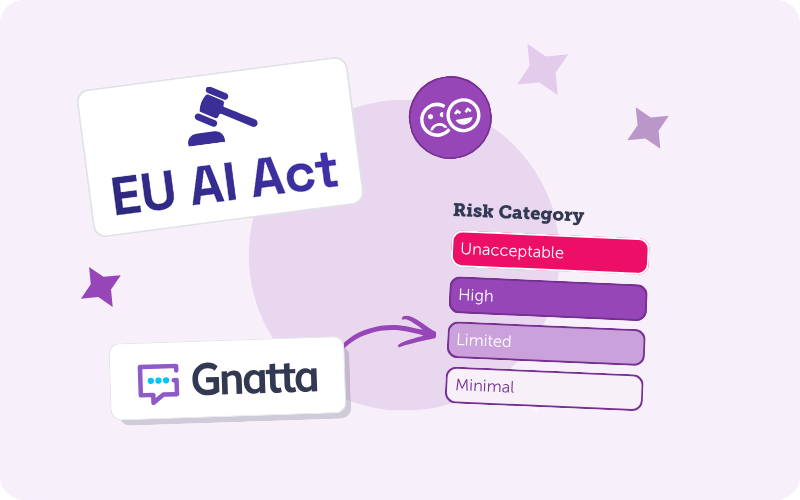
Several important provisions begin to apply from 2 August 2026, including transparency obligations under Article 50 for certain AI systems. For organisations using customer-facing AI, this is the change most likely to require practical action.
The key principle is transparency: customers shouldn’t unknowingly interact with AI where disclosure is required.
Do I need to tell customers they’re speaking with AI?
In most cases, yes.
Where AI interacts directly with individuals, organisations should ensure users are informed that they’re engaging with an AI system, unless it’s already obvious from the circumstances.
This doesn’t need to be complicated.
Many organisations can simply introduce a short message at the beginning of a conversation, such as:
You’re chatting with our AI assistant. If needed, we’ll connect you with a member of our team.
Other examples include:
- “This response was generated using AI.”
- “AI may summarise this conversation.”
- “A human advisor can review or take over this conversation.”
Does the Act apply outside the EU?
Like GDPR, the AI Act has an extra-territorial effect in some circumstances.
If your organisation places AI systems on the EU market or uses AI in ways that affect individuals within the EU, the legislation may still apply even if your business is based elsewhere.
Who is responsible?
The legislation distinguishes between two important roles.
AI Provider: The organisation that develops or supplies the AI system.
AI Deployer: The organisation using AI within its own business processes.
Providers must build AI systems that support compliant deployment, while deployers are responsible for how those systems are configured and presented to end users.
Compliance isn’t just about disclosure
Adding an AI disclaimer is only one part of responsible AI deployment.
Businesses should also consider:
- When should AI hand conversations to a person?
- Can AI decisions be audited?
- Can AI be restricted to approved knowledge?
- Can AI deployments be monitored and governed over time?
- Are customers able to understand when AI has been involved?
These operational controls are becoming just as important as the legal requirements themselves.
How Gnatta supports responsible AI
At Gnatta, we’ve always believed successful AI should be:
- Transparent
- Controlled
- Auditable
- Human-centric
That’s why our AI platform includes configurable customer disclosures, controlled AI Agents, human handover, conversation auditability and governance tools that help organisations deploy AI confidently and responsibly.
Rather than replacing customer service overnight, organisations can introduce AI gradually – by channel, workflow or use case – while maintaining complete oversight.
If you’d like to discuss your AI strategy or see how Gnatta can help, we’d love to chat.
👉 Book a demo