Customer Return Habits & Opinions

From reasonable returns timelines to how often returns are made, we set out to uncover all the customer return habits and opinions of typical British customers.

Tracking and monitoring customer habits and opinions is a must for customer-facing businesses, and this can usually be achieved through internal analytics and data analysis. But when it comes to wider trends in huge aspects of retail businesses, it can be a little trickier to dig into customer habits and find out how they feel about your processes.

Customer returns are one aspect of retail businesses that many can improve upon with access to the right insights. Whether your team is seeking ways to meet customer needs better or reduce your returns rate, understanding the common habits and opinions of customers regarding returns is a great place to start. Here, you can delve into our extensive research on this topic and find out what Brits think of returns. From the frequency of returns to opinions on paying for returns, we’ve covered it all here.

How We Conducted Our Research

We created a survey asking the British public about their habits when it comes to returning purchases. The survey was designed to uncover thoughts and feelings on things such as reasonable returns timelines, how often people return things they have bought, and whether customers prefer ordering more sizes and returning what doesn’t work or only ordering one item and exchanging it. Through our study, we also set out to discover the most popular returns methods and returns methods, how customers would rate their customer service experiences regarding returns and more.

Please note that percentages are rounded to the nearest whole number for this research.

Opinions on Return Policies

Most retailers have a unique return policy for customers to refer to when they make a purchase that they’d like to exchange or return. The policy will typically include things like the return window, how much customers will need to pay to make a return and the information for the delivery company the retailer works with for processing returns.

Since the policy dictates the return process followed by customers, we asked a few questions to find out how British customers feel about the policies they’ve encountered when shopping.

Retailer Return Policies

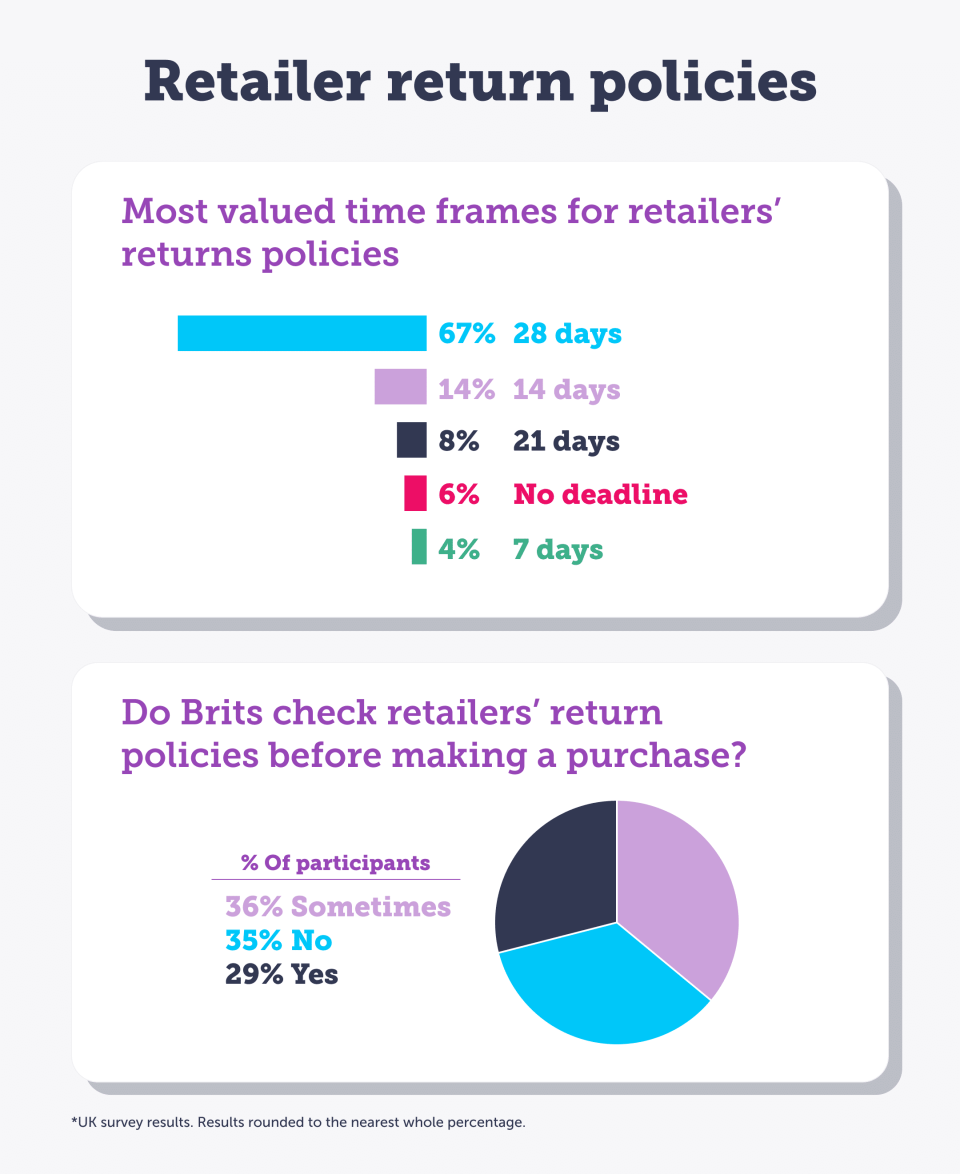
One of the biggest aspects of a return policy is the length of time given to customers for making a return. Most participants agree that the default return policy should be 28 days, which matches the average length of a returns policy in Britain. Around 1 in 10 said they think the return policy should only be a two-week window, while very few participants believe there shouldn’t be a return policy deadline. This suggests that most customers are happy to have a cut-off point for when they can no longer return something, although the amount of time they’d be happy with could depend on factors like price, shipping times and the types of products or services being purchased.

When it comes to checking the retailer’s return policy before making a purchase, we found that most people either check sometimes or never. It seems that the return policy is an afterthought for many customers, which could cause issues if the return policy has a shorter-than-average return window for example.

KEY TAKEAWAY: Retailers might want to consider making their policy more visible, especially if the policy deviates from the expected return conditions.

Paying for Returns

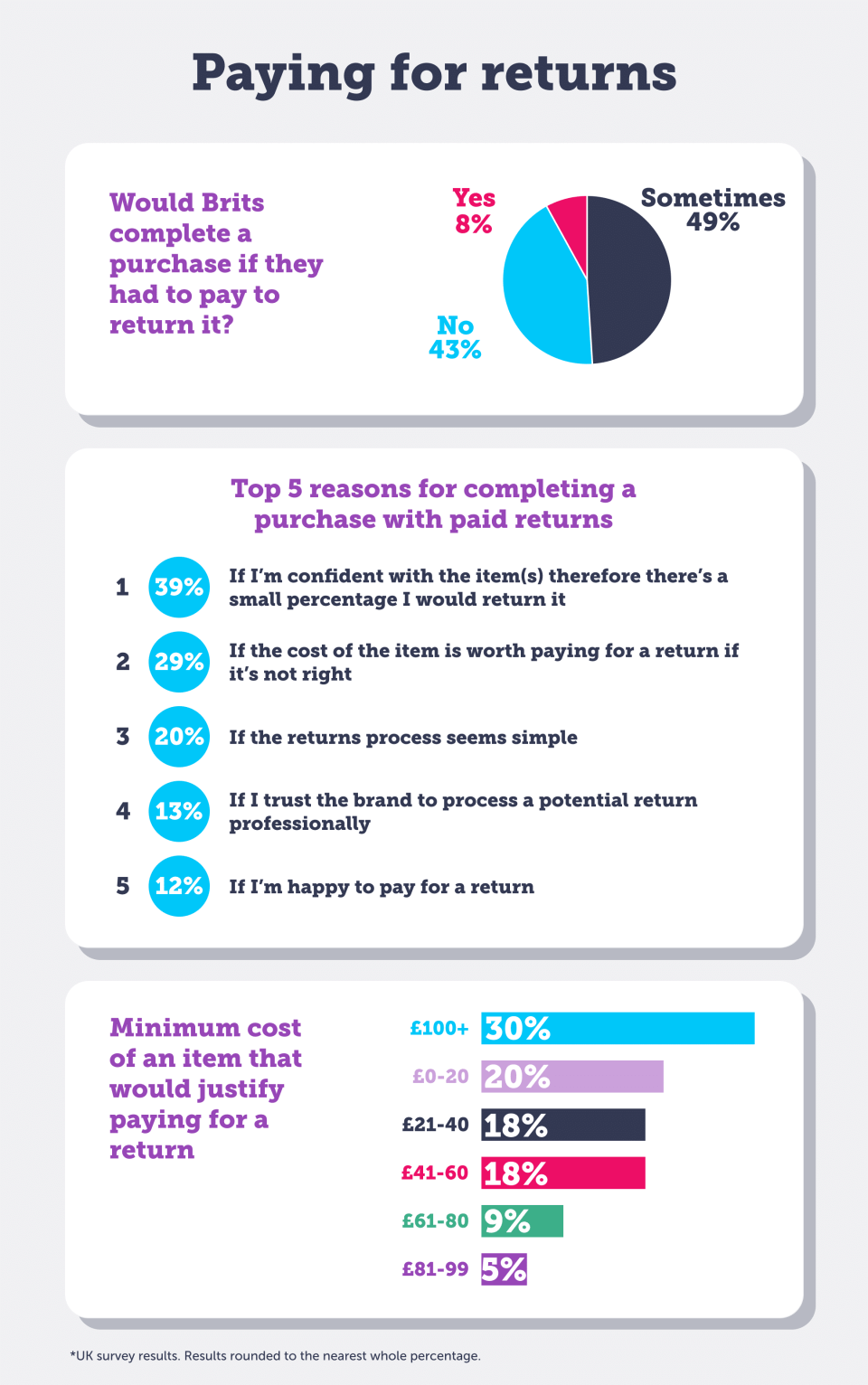
Some retailers require customers to pay for delivery fees or processing under their return policy. So to find out how customers feel about this, we asked if they’d be willing to complete their purchase knowing that they needed to pay for returns. We found that nearly half of customers would only sometimes complete their purchase if this was the case. Meanwhile, less than half said they wouldn’t be willing to complete a purchase knowing they’d be liable to pay for the return. Overall, asking customers to pay for their returns doesn’t seem popular and could reduce retention rates and customer satisfaction if businesses choose this returns model.

For those who wouldn’t mind paying, the most popular reason for this was confidence in the product. This could be because they know they can trust the quality of their purchase based on past experiences. Another popular reason was a simple returns process, with 1 in 5 stating this. Accessibility and usability appear to be key for a satisfactory customer returns journey and should be central to your strategy as a result.

The second most popular reason for purchasing a product knowing that returns would need to be paid for was because the cost of the item seemed worth paying for a return if it wasn’t right. The majority of people agreed that a product must be more than £100 to justify paying for a return, suggesting that higher-value orders are worth paying extra to return in most cases. This is likely to be down to more customers expecting their higher-value orders to be refunded correctly and quickly.

1 in 5 Brits (20%) can justify returning an item, at a cost, that was under £20, suggesting that the cost of the item doesn’t seem to matter. Customers don’t seem to mind paying for the return of an order with any value as long as they trust that the company will do it correctly.

KEY TAKEAWAY: Paying for returns doesn’t seem popular and could lower retention rates and customer satisfaction. However, some customers don’t mind paying if they trust that the business will do it correctly and if their orders are higher value.

The Value of Different Returns Delivery Providers

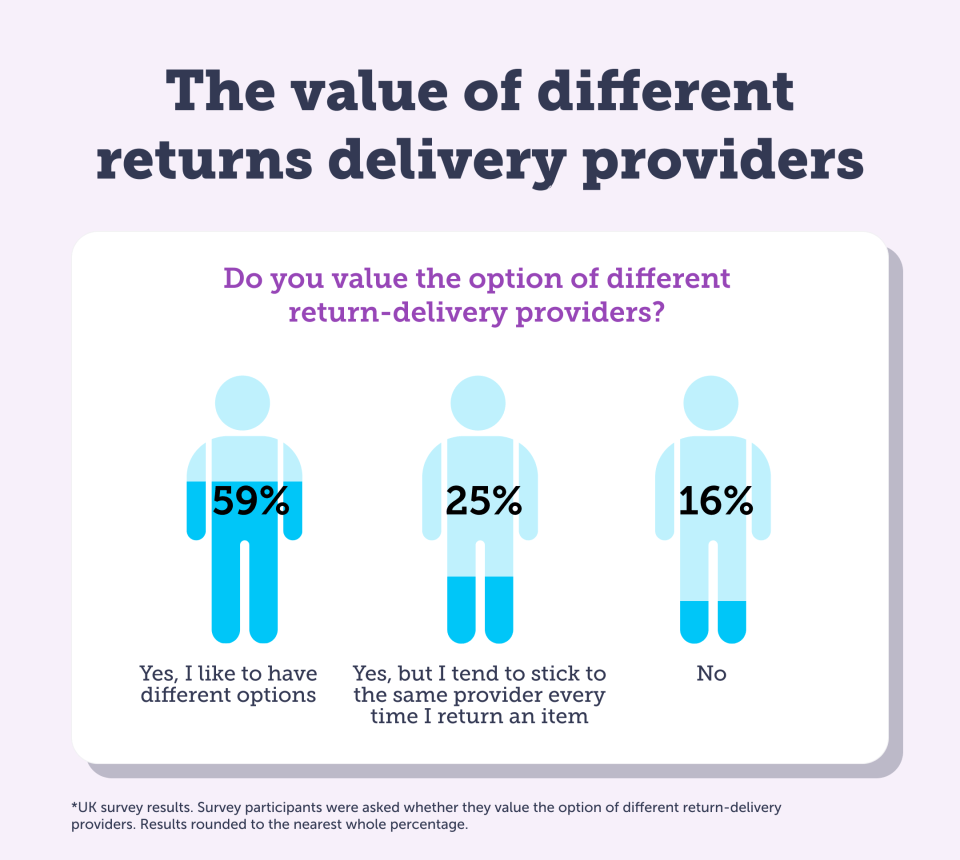
Retailers sometimes offer a selection of delivery provider options for their customers to use when processing their returns. This seems to work well since nearly 6 in 10 Brits agreed that they like having different delivery options when returning an item. Whether they take it to a local drop-off point or have a courier collect the return, customers value retailers who offer the best options and provide flexibility to process the return on their terms.

On the other hand, a quarter of participants said that they like the options that retailers provide but prefer sticking to the same provider. This could be because they trust certain providers more than others, so it’s worth gathering insights on which return-delivery provider your customers use the most. From here, you could decide to cut down the number of options and only use the providers your customers choose most often.

KEY TAKEAWAY: Flexibility and choices that suit your customers are most likely to be received well when it comes to returns delivery providers.

Customer Purchasing and Return Habits

From the most popular return methods to dealing with missing return deadlines, we’ll take you through the most common customer return habits below.

Most Popular Return Methods

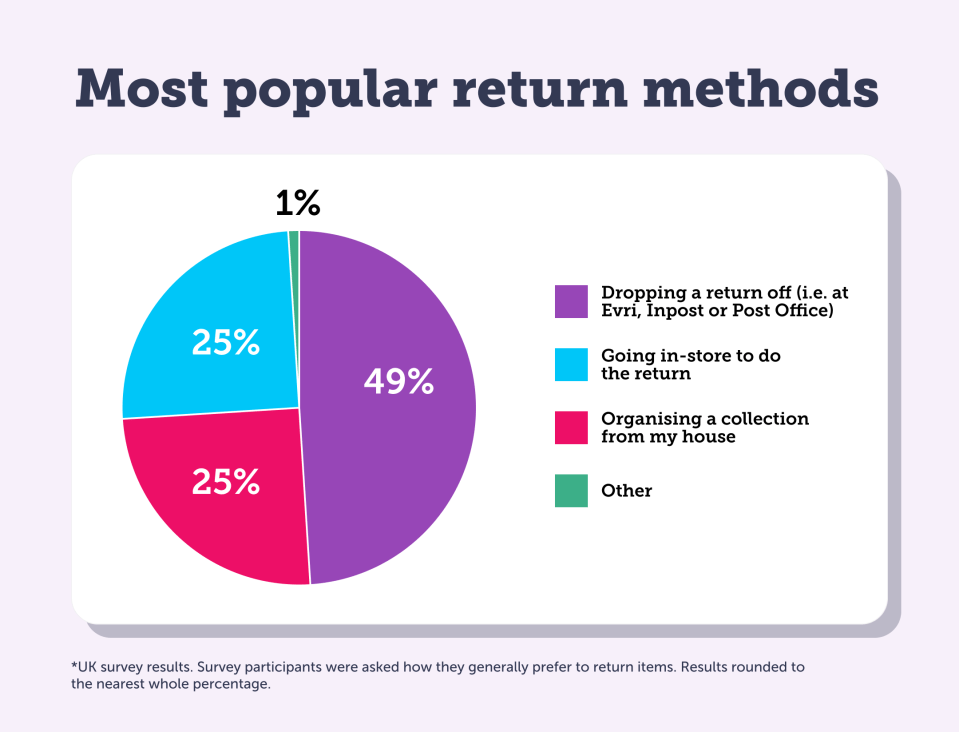
The most popular return method used by customers is a return drop-off point such as Evri or Inpost. Meanwhile, a quarter of participants prefer going into the retailer’s store to do their return, and another quarter value the ease of organising a collection from their house.

KEY TAKEAWAY: Convenience seems to be key when it comes to return methods, and as a retailer, it’s your job to find out which methods are best for your customers and ensure these options are offered. Being able to return items at any time in a location that suits the customer should be a top priority to stay ahead of the competition and keep satisfaction high.

How Long Does It Take Brits to Return an Item?

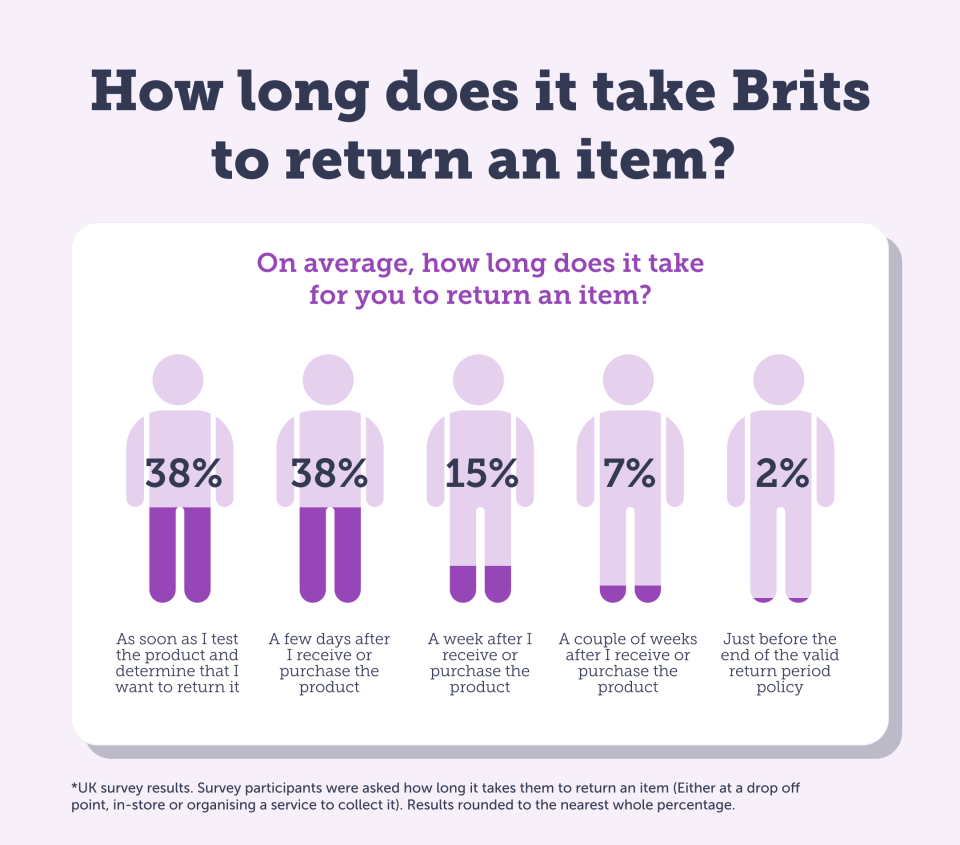
Our research revealed that Brits are most likely to return their order within a few days of receiving it or once they’ve tested the products.

KEY TAKEAWAY: Many customers are good at sticking to the average return policy window and dealing with their return soon after receiving the order. For retailers, this means that customers will expect the return to be processed quickly and efficiently.

Most Popular Ways that Customers Deal with Missing a Return Deadline

Customers might miss the return deadline for a variety of reasons. Whether they forgot to read the return policy until it was too late or simply forgot about the item altogether, we wanted to know how they were most likely to deal with this situation.

Our survey found that the majority of customers that had missed the deadline stated in the return policy had resorted to selling their item. This might be because too much time has passed since they ordered the item to attempt to convince the business to accept their return. However, the second most common way for customers to deal with missing a return deadline is to try their luck with the retailer by contacting them directly for an extension on the return policy.

KEY TAKEAWAY: Retailers will sometimes make exceptions on their return policy under specific circumstances, but this can be tricky to navigate when you want to provide a positive experience for your customers.

How Often Do Brits…

Make a Purchase that needs Returning?

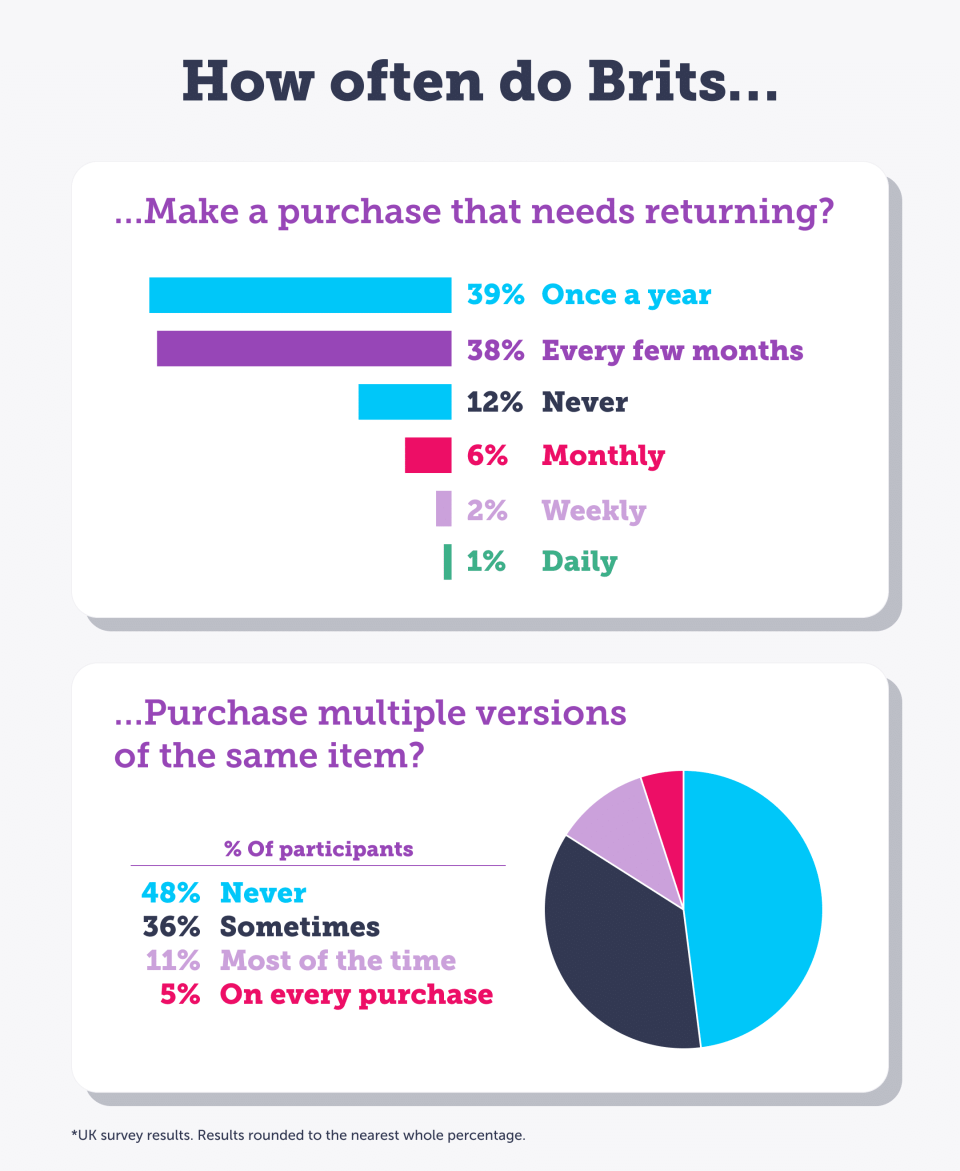
When asked how often Brits make a purchase that they need to return, most customers said this is a yearly occurrence. ‘Every few months’ and ‘never’ were the second and third most common responses, respectively.

These responses seem to suggest that the average customer will return items at least once a year, which means retailers should pay close attention to their process and regularly check that the customer experience in this area is up to standard.

The frequency of returns can also indicate product issues, so it’s worth monitoring the number of returns your customers are making and comparing this to our survey data. More frequent returns could be due to factors like inaccurate product descriptions or longer than expected delivery times.

KEY TAKEAWAY: Retailers need to stay up to date on their returns processes and make sure the customer experience is good throughout.

Purchase Multiple Versions of the Same Item?

We then asked how often customers purchase multiple versions of the same thing in different sizes or colours for example. Interestingly, almost half of Brits said they never buy multiple versions of the same item in the same order with the intention of returning the unwanted item(s). Trust in the brand could be the biggest reason for this since customers might feel that product descriptions and images represent the product well enough to only purchase it in one size or colour.

Almost 2 in 5 also admitted to sometimes buying multiple versions of an item with the intention of returning the unwanted ones. This could be due to several reasons, including purchasing from a brand for the first time and being unsure of which product is best for them.

KEY TAKEAWAY: Retailers should check that product descriptions and images are accurate and represent the product well since this can eliminate the need for customers to purchase and return additional colours or sizes.

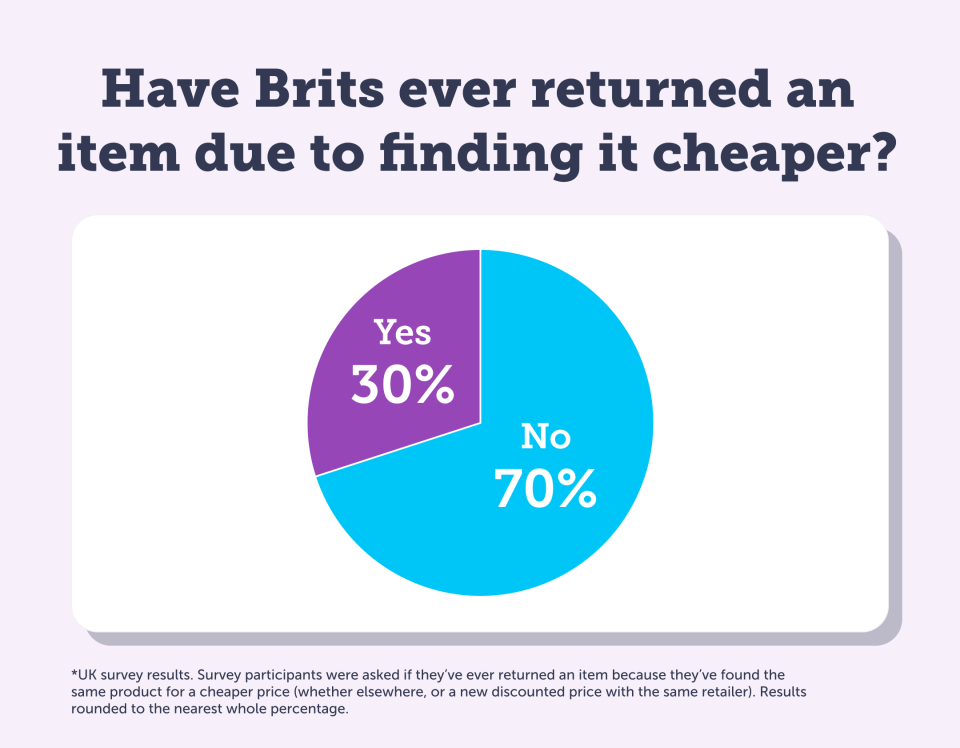
Have Brits Ever Returned an Item Due to Finding it Cheaper Elsewhere?

Since most participants said they’d never returned an item due to finding it cheaper, it seems that price isn’t a main reason for returning items. This means that even if customers found a better deal elsewhere or at a new discounted price, they would still choose to keep their item.

KEY TAKEAWAY: Cost changes or discrepancies don’t seem to be an important factor in the decision to return items which indicates that customers prefer to keep items they’ve paid full price for rather than going through the returns process to get the discount.

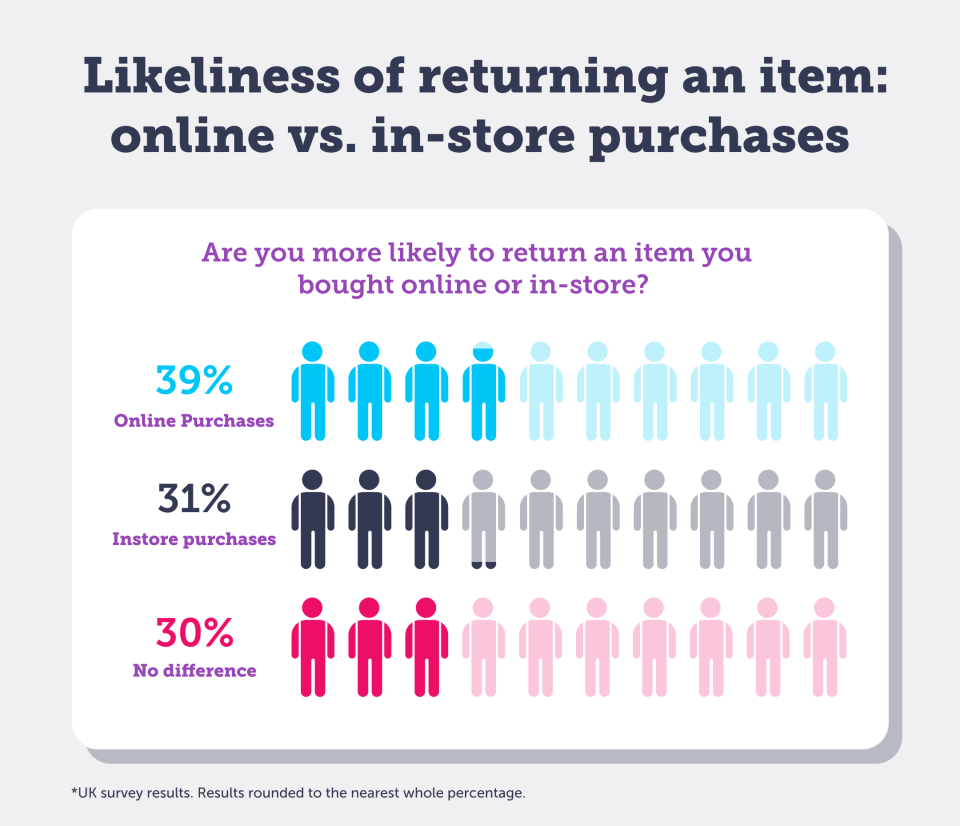
Likeliness of Returning an Item: Online vs. In-Store Purchases

The majority of customers said they’re more likely to return an item they’ve bought online than an in-store purchase. However, the percentage difference isn’t huge, suggesting in-store shoppers aren’t trying their items before purchasing.

3 in 10 said there is no difference in the likelihood of whether they’d choose to return an item they’ve bought online or in-store. One explanation for this could be that retailers are providing better images and product descriptions as shoppers increasingly favour online shopping. This is bringing the shopping experience much closer to real life, which means that returns are just as likely for either.

KEY TAKEAWAY: Retailers with physical stores and a website should try to keep the customer experience at the same high standard for both.

Most Common Reasons Why Items Are Returned

Customer returns can be processed for a huge variety of reasons, from clothing not fitting to items being damaged or broken. So what are the most common reasons according to British customers?

Our research revealed that the most popular reason for returns was items arriving broken or damaged. This is often out of the retailer’s control, although it can be worth including additional product checks into your process if this reason is common among your customers.

The second most common reason cited was the item not being fit for purpose. Again, this is difficult for online retailers to control since customers can have very different expectations. Adding accurate and detailed product descriptions and images can sometimes help reduce the number of returns for this reason because the underlying issue might be a lack of understanding about what the customer is purchasing.

Retailers shipping the wrong item was an issue for 36% of customers, making this the third most common reason for sending items back. This can be down to things like human error during the shipping process or system issues, however, it’s important to minimise returns made for this reason since this can negatively affect customer satisfaction. Automation can be used to check that the correct items are picked from the warehouse and shipped to customers, for instance.

KEY TAKEAWAY: Since the most common reason for returns is broken or damaged items, more retailers should focus on increasing product checks before shipping.

Top Factors that Prevent Customers from Returning an Item

For retailers, it’s important to get the policy right on returns since they’re needed for many customers. When it comes down to factors preventing customers from returning items, these could be harming your customer satisfaction and brand reputation.

We found that paying for a return is the biggest factor for being ‘put off’ returning an item. Having to send the return back overseas was another popular reason for ‘being put off’ returning an item. The lack of convenience that comes with paying for a return or shipping overseas seems to be a big deterrent for returning items, regardless of why the customer wants to send their order back.

Meanwhile, 3 in 10 said that they’d be ‘put off’ making a return if the item was too cheap, indicating that even if customers weren’t happy with their low-cost items, they’d prefer to keep the order rather than initiating the returns process. This could be because they don’t believe the items are worth the time or money required to return them.

The same number of customers would also avoid returning items if the retailer didn’t offer return options that worked for the buyer, again showing how important convenience is for customers.

Some Brits are keen to support independent businesses, with 8% saying that they wouldn’t want to cause small businesses any issues by returning an item to them. However, the same number of customers said that nothing would put them off returning an item, showing that some customers will go through the returns process regardless of whether they experience the issues mentioned.

KEY TAKEAWAY: Businesses should strive for customer convenience in their returns policy.

Customer Service & Returns

Customer service can often be necessary for processing customer returns. Whether a customer is also bringing a complaint to the team about the item they want to return or they’re not sure how to start the process, it’s important to find out how customers feel about the way their returns are handled by customer service representatives.

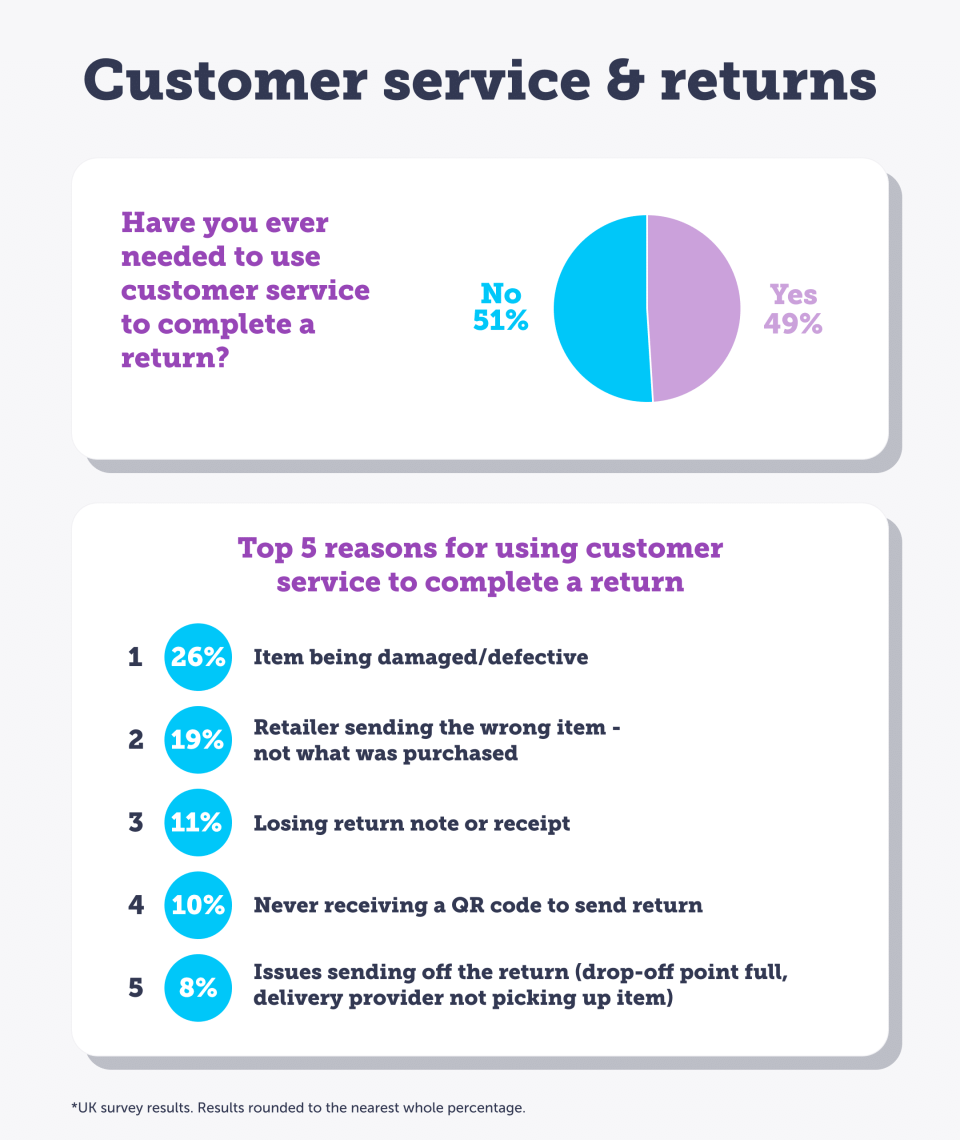
We found that customers were almost split down the middle, with just over half having never used customer service to complete a return and just less than half who had. The customers who haven’t used customer service might have been dealing with a straightforward return that they didn’t require assistance for.

The top reason why Brits had used customer service to complete a return was due to the item being damaged or defective. Damaged items are a customer service issue that retailers should be empathetic and apologetic about in order to turn a negative experience to a positive one.

Nearly 1 in 5 said they’d previously contacted customer service because the retailer sent them the wrong item. The third most common reason for using customer service for a return was because customers had lost their receipt. This is more likely to be from in-store purchases, although customer service can be contacted via any communication channels available. Retailers should have a policy for whether they’ll accept returns without a receipt, and this could be communicated clearly to avoid repeat customer queries about it.

KEY TAKEAWAY: Regardless of why customers choose to use or avoid customer service for their return, these results show that retailers must prepare their representatives and communication channels for dealing with this correctly and efficiently.

A Bad Returns Experience

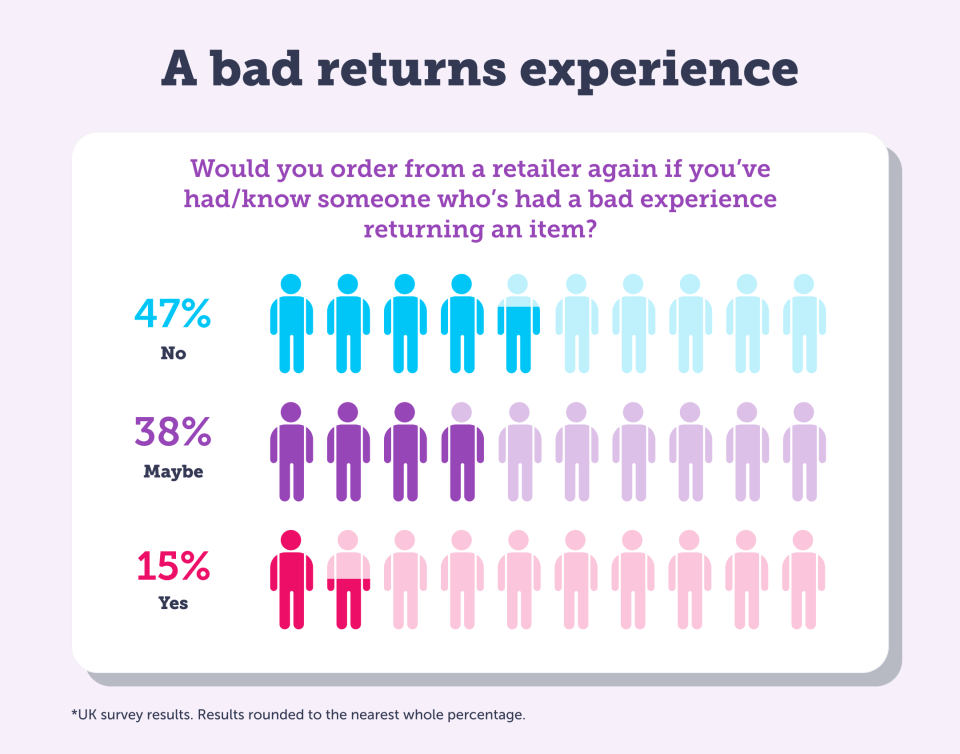
Nearly half of the customers asked in our survey said they wouldn’t order from a retailer again if they’ve previously had a bad experience returning an item, or known someone who has. A bad experience seems to have a big impact on future purchases with a brand, which is a reason to make sure that your policy and processes are easy and efficient for the customer.

Almost 4 in 10 said they’d consider ordering from a retailer again, even if they’ve personally had a bad experience returning an item or know someone else who has. This is likely to be down to how the retailer and their customer service team handled the return or apology after a negative experience, again highlighting the important role of customer care in the returns process.

KEY TAKEAWAY: Customer care in relation to the returns process can impact retention and brand loyalty. So if a customer has a positive interaction, this could end up outweighing their negative product experience.

Christmas Returns

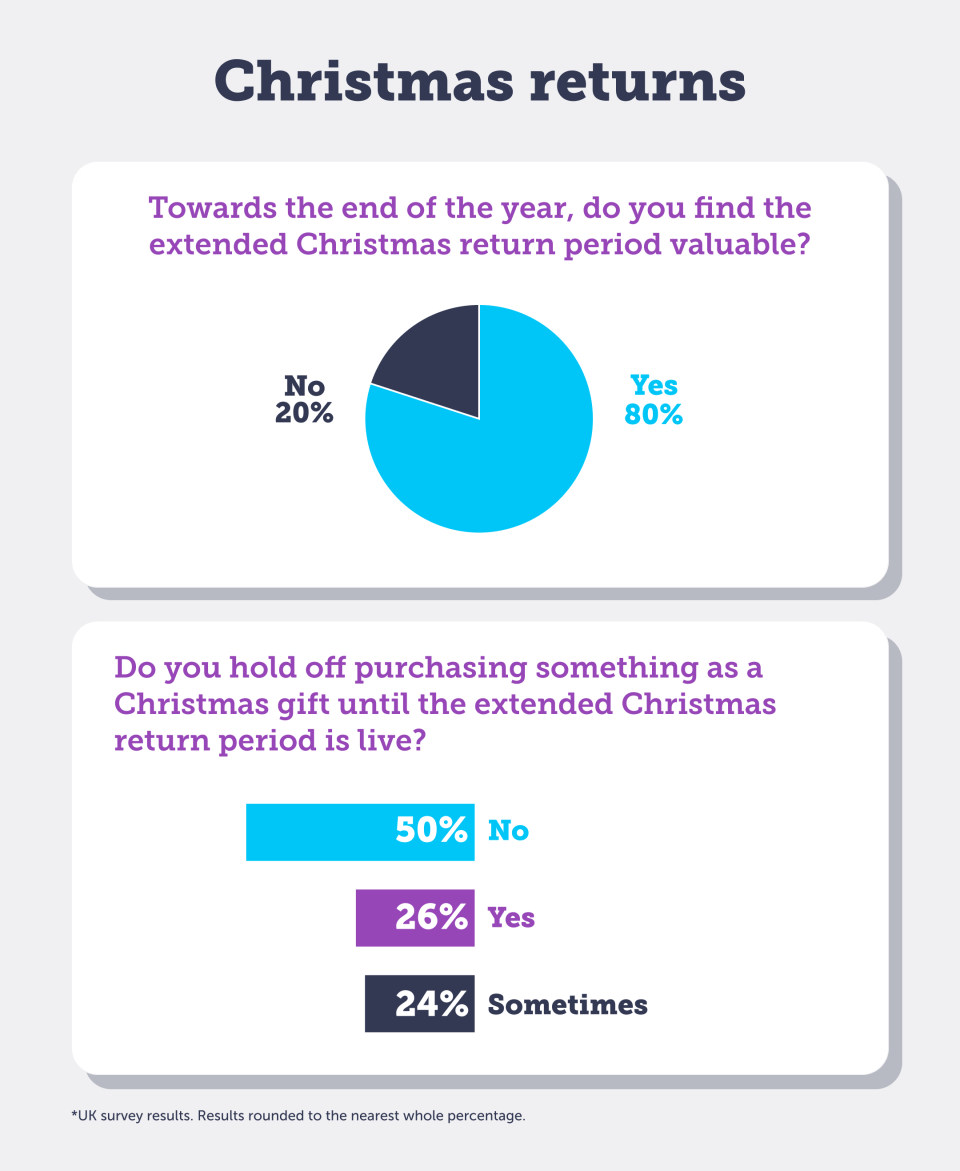
An extended returns period is offered by many retailers around the Christmas period to cover unwanted gifts and clothing that doesn’t fit, for example. And it seems that this pays off for those retailers who get involved with this since 4 in 5 Brits value the extended Christmas return period. But although so many customers value the extension, half of Brits asked said they wouldn’t hold off purchasing something as a gift until the extended returns period is live.

So while they value the offer of the extension, it doesn’t seem to affect when customers choose to make their purchases.

KEY TAKEAWAY: Since many customers value the extended returns period at Christmas, it’s a good idea to offer this regardless of how many customers use it.

Generational Results

How do opinions on returns differ depending on the generation that customers belong to? We set out to find out with a range of questions.

“Do you check a retailer’s return policy before making a purchase?”

Half of those in the Silent Generation said they check a retailer’s return policy before making a purchase – the highest percentage across all generations.

In comparison, less than a quarter of Gen X’ers said they checked the policy, while slightly more customers from the Millennial category looked at the policy prior to making a purchase.

It appears that most people, regardless of which generation they belong to, either don’t check a retailer’s return policy before making a purchase or only review it sometimes.

KEY TAKEAWAY: Retailers might want to make their policies more visible on their site to encourage customers to check it, especially if the policy is different to other retailers.

“Would you complete a purchase, knowing that you would have to pay for a return?”

The Silent Generation are more accepting of paid returns, as 20% said they’d complete an order knowing they’d need to pay for a return and 70% said that they would sometimes complete the order – the highest percentage across both answers.

Gen X were most inclined to not complete an order with paid returns, with 48% stating they wouldn’t go through with the purchase if they needed to pay for a return. This might be because younger generations have higher expectations of online retailers and are more likely to shop around for a deal that suits them best. Meanwhile, older generations are more brand loyal, which could lead them to make purchases knowing that they’d need to pay for returns.

KEY TAKEAWAY: Retailers should take their demographics into consideration when deciding whether to charge for returns.

“On average, how long does it take you to return an item?”

The Silent Generation appear to be the quickest at returning an order as soon as they test it compared to Millennials. The majority of people seem to return an order within a few days of receiving the product. Again, the older generations came out on top when compared to the younger generations.

This suggests that the younger generations are more hesitant to either try their product as soon as it arrives or are slower to organise the way they would return their order. This might be down to older generations having more free time to deal with their returns due to being fully or partially retired.

Gen Z are most likely to return their item a couple of weeks after receiving the order. As this is still within the average return window, the delay shouldn’t do much harm to retailers. It could be a good idea to automate returns to make it simpler for customers to handle their returns and encourage them to process them quickly, though.

KEY TAKEAWAY: Making the returns process simpler using tools like automation might encourage customers of all ages to process their returns within the window stated in the policy.

“On average, how often do you make a purchase that needs returning?”

The majority of Brits across all generations only make a purchase that needs returning every few months.

It appears to be the case that hardly any customers need to return a purchase either daily, weekly or monthly. Gen Z had the highest percentage of those returning an item every month, which could be because they tend to make more frequent orders than other generations.

Interestingly, Gen X was the generation that had the highest percentage of those who never had to return a purchase (16%). This might be because they tend to shop around more and are surer of their purchase as a result.

KEY TAKEAWAY: It’s worth gaining insights into your return rates and how these differ based on demographics since this can help you improve your processes.

“Are you more likely to return an item you bought online or in-store?”

Gen Z’ers were the most likely to return online orders compared to other generations, with more than three-quarters of customers in this generation stating that they are more likely to return an online order. This again suggests that younger generations are making more frequent online purchases than those in other age groups, which is why they’re more likely to return orders more often. Meanwhile, those in the Baby Boomer generation were more likely to return items they bought in physical stores.

On the other hand, only 2 in 10 Gen Z customers were likely to return an item they’d bought in-store, proving that online shopping is much more popular for the younger generations.

KEY TAKEAWAY: Again, this highlights the importance of keeping the customer experience at the same standard for online and in-store shoppers.

“Would you order from a retailer again if you’ve had/know someone who’s had a bad experience returning an item?”

Millennials are the generation who are most likely to order from a retailer again even after having or knowing someone who’s had a hard experience returning an item.

On the other hand, the Silent Generation were most likely to avoid ordering again after a previous bad experience. None of the participants in the Silent Generation would confidently order again from a retailer after a bad returns experience, suggesting that past experiences with a business have a huge impact on customer retention for this age group.

Gen Z was on the fence as they had the highest percentage in terms of those who might order from a retailer again after a negative return experience (47%). This suggests that the younger generations are slightly more forgiving after a bad experience in comparison to older generations.

KEY TAKEAWAY: A bad experience seems to have an impact on customers of all generations, which means that retailers should evaluate their returns process to find out how it might have affected retention and loyalty.
We hope you found these insights into customer return habits and opinions interesting. Whether you’re a retail start-up looking to improve your returns policy or an international business seeking the best ways to meet different customer needs with returns, these habits and opinions are a great place to start.

Book a Free Demo CTA

To find out more about Gnatta and how our customer communication software can work for your business, get in touch with us.

Not ready for a demo?

We get it - you're just exploring your options. Sign up to our monthly newsletter updates in the meantime, and we'll keep you in the loop with new features, use cases and research in one compact email. No-strings, no obligations.